

Neurodegenerative Diseases
Neurodegenerative diseases are a group of disorders characterized by the gradual, progressive degeneration of nerve cells, or neurons, in the brain and spinal cord. These diseases disrupt vital cognitive and motor functions, often leading to severe disabilities and diminished quality of life. Among the most well-known neurodegenerative diseases are Alzheimer’s and Parkinson’s disease.
Parkinson’s Disease
Parkinson’s disease is a progressive neurodegenerative disorder that affects movement control. It is caused by the gradual loss of dopamine-producing neurons in a specific area of the brain called the substantia nigra. Dopamine is a neurotransmitter that plays a crucial role in regulating movement, coordination, and emotional responses. As dopamine levels decrease, individuals with Parkinson’s begin to experience movement difficulties, such as tremors, muscle rigidity, slowed movement, and balance problems. Over time, the disease can impact various aspects of daily functioning, ultimately requiring significant care and support.
Parkinson’s disease primarily affects people over 60, although early-onset Parkinson’s can occur in younger individuals. It is the second most common neurodegenerative disorder after Alzheimer’s disease, and while treatments are available to help manage symptoms, there is currently no cure.
What Are Causes and Risk Factors of Parkinson’s Disease?
The exact cause of Parkinson’s disease remains unclear, but scientists believe it results from a combination of genetic, environmental, and lifestyle factors. Several factors contribute to the condition, although why these factors lead to the disease in some individuals but not others, is still unknown.
- Loss of Dopamine-Producing Neurons: In Parkinson’s disease, neurons that produce dopamine in the substantia nigra begin to deteriorate. This loss of dopamine disrupts communication between nerve cells responsible for controlling movement, leading to the characteristic motor symptoms of Parkinson’s.
- Protein Clumps (Lewy Bodies): People with Parkinson’s often develop abnormal clumps of a protein called alpha-synuclein in their brain cells. These clumps, known as Lewy bodies, interfere with normal cellular function. Although Lewy bodies are a hallmark of Parkinson’s, their exact role in causing the disease is not fully understood.
- Genetics: While most cases of Parkinson’s disease are sporadic (not directly inherited), genetic factors play a role. Researchers have identified several gene mutations associated with Parkinson’s, particularly in cases of early-onset Parkinson’s. These mutations are rare and only account for a small percentage of Parkinson’s cases but having a family history of the disease may increase the risk.
Other factors, including lifestyle, and environmental influences, play a significant role in the disease’s development. Some of the risk factors are believed to include:
- Environmental Factors: Certain environmental toxins and pollutants, such as pesticides, herbicides, and heavy metals, have been linked to an increased risk of developing Parkinson’s. Exposure to these substances through certain jobs, such as farming and welding, may contribute to oxidative stress and inflammation, leading to the degeneration of dopamine-producing cells in susceptible individuals.
- Age: Age is the most significant risk factor for Parkinson’s disease. The risk increases with age, with most people being diagnosed after the age of 60. However, younger individuals can also develop Parkinson’s, particularly in cases with a genetic component.
- Gender: Men are about 1.5 times more likely to develop Parkinson’s than women, although the reasons for this disparity are not fully understood. It may be due to hormonal differences or genetic susceptibility in men.
- Family History: Having a close family member with Parkinson’s disease slightly increases the risk, particularly if there is a known genetic mutation associated with the disease. However, most cases are not directly inherited, and a family history is only one of many factors.
- Head Injuries: Studies suggest that people who have experienced severe or repeated head trauma, such as concussions, may be at an elevated risk for developing Parkinson’s disease. Head injuries may disrupt the normal functioning of brain cells, potentially triggering degenerative processes.
- Other Health Conditions: Conditions that cause oxidative stress and inflammation, such as diabetes and cardiovascular disease, may be associated with an increased risk of Parkinson’s. Inflammation and oxidative stress can damage brain cells, contributing to the degeneration of neurons..
How Do You Reduce Risk of Parkinson’s Disease?

While there is no guaranteed way to prevent Parkinson’s, adopting a healthy lifestyle and making certain choices may help lower the risk. These strategies focus on promoting brain health, reducing oxidative stress, and maintaining overall wellness.
- Eat a Balanced, Anti-Inflammatory Diet: Diets rich in antioxidants, such as Nutrivore diet philosophy, may help reduce inflammation and oxidative stress, which are linked to the loss of dopamine-producing neurons. Foods high in antioxidants include berries, leafy greens, nuts, and fish rich in omega-3 fatty acids. Some studies suggest that caffeine (from coffee or tea) and flavonoid-rich foods (such as berries and dark chocolate) may also be associated with a lower risk of Parkinson’s.
- Exercise Regularly: Physical activity is beneficial for brain health and may help protect against neurodegenerative diseases. Regular exercise, particularly aerobic activities like walking, swimming, or cycling, has been shown to improve motor function and may help delay the onset of Parkinson’s symptoms in at-risk individuals. Exercise also boosts dopamine levels and improves overall mood, which can be particularly beneficial for people with Parkinson’s.
- Protect Against Head Injuries: Preventing head injuries by wearing helmets, using seat belts, and practicing safety in activities prone to head trauma can reduce the risk of developing Parkinson’s and other neurological conditions.
- Limit Exposure to Environmental Toxins: Reducing exposure to pesticides, herbicides, and industrial chemicals is advisable, especially for people who work in environments with higher risks of toxin exposure. Using protective equipment and following safety protocols can help minimize exposure.
- Stay Mentally and Socially Engaged: Engaging in mentally stimulating activities, such as reading, learning new skills, and socializing, can support cognitive health and may help protect against Parkinson’s and other neurodegenerative diseases. Maintaining strong social connections has been linked to improved mental and physical health, which may indirectly benefit brain health.
- Monitor Health and Chronic Conditions: Managing chronic conditions such as high blood pressure, diabetes, and heart disease can help protect brain health. These conditions can contribute to inflammation and oxidative stress, so controlling them with medication, diet, and exercise may help reduce the risk of Parkinson’s.
Nutrients for Parkinson’s Disease
Learn more about all of the nutrients linked to risk of Parkinson’s Disease, the other ways these nutrients improve our health, and the best food sources of each of them!


How Do Nutrients Improve Parkinson’s & Alzheimer’s Disease?
A Nutrivore approach emphasizes nutrients that help the body function at its best—including the brain and nervous system. Current research highlights the following nutrients for cognitive health support, along with food sources to help you incorporate these nutrients through your diet.
| Nutrient | How it Supports Parkinson’s & Alzheimer’s Disease | Top Food Sources |
|---|---|---|
| Vitamin C | Lower vitamin C levels are common in both Alzheimer’s and Parkinson’s, and higher vitamin C intake has been associated with slower cognitive decline, reduced risk of Alzheimer’s, and protection against oxidative damage in neural tissue. | Top food sources include citrus fruits, kiwis, berries, red peppers, guavas, papayas, broccoli, Brussels sprouts, tomatoes, cantaloupe, leafy greens, and certain organ meats. |
| Vitamin D | Vitamin D may help reduce cognitive decline in Alzheimer’s and appears to protect dopamine-producing neurons in Parkinson’s; deficiency is linked with worsened symptoms and higher disease risk. | Top food sources include fatty fish like salmon, mackerel, sardines, and herring, fish eggs (roe), liver, red meat, egg yolks, and UV-exposed mushrooms or baker’s yeast. |
| Vitamin E | Vitamin E may help protect cognitive function in Alzheimer’s through antioxidant activity and reduced oxidative stress, though results are mixed; benefits in Parkinson’s remain inconsistent. | Top food sources include nuts and seeds (particularly sunflower seeds), plant oils such as wheat germ oil, peanuts, chestnuts, coconut, kiwis, and carrots. |
| Vitamin K | Higher vitamin K intake has been associated with better cognitive performance and lower Alzheimer’s pathology; insufficient levels correlate with worse cognition in older adults. | Top food sources include leafy green vegetables such as kale, chard, collards, spinach, broccoli, and Brussels sprouts for vitamin K1, and natto, organ meats, egg yolks, certain hard cheeses, butter, pork, and dark chicken meat for vitamin K2. |
| Choline | Higher choline intake is linked with better cognitive function, improved memory, and lower Alzheimer’s pathology; deficiency may worsen brain inflammation relevant to Alzheimer’s progression. | Good food sources include egg yolks, poultry, fish, fish eggs, cruciferous vegetables (especially broccoli and cauliflower), salmon, peanuts, soybeans, and dairy. |
| Zinc | Zinc may influence neurodegenerative processes involved in Alzheimer’s by affecting immune regulation and oxidative stress, though the exact mechanisms remain unclear. | Good sources of zinc include red meat, some organ meats (especially oysters), eggs, legumes, nuts, and whole grains. |
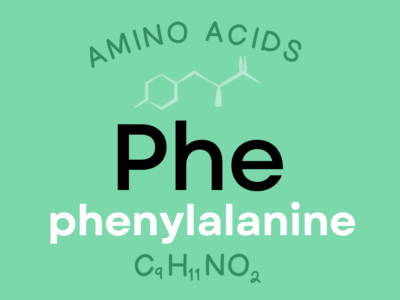
| Phenylalanine | Limited and older research suggests phenylalanine may support neurotransmitter production and potentially improve certain Parkinson’s symptoms, but findings are preliminary and need replication. | Top food sources include beef, pork, poultry, fish, dairy products, eggs, nuts, seeds, and diet foods containing aspartame. |
| EPA & DHA | EPA and DHA may help protect neurons, reduce neuroinflammation, and support cognitive function in Alzheimer’s, and may help protect dopaminergic neurons in Parkinson’s; evidence spans multiple neurological conditions. | Top food sources include fatty cold-water fish like salmon, herring, mackerel, sardines, and menhaden, algae, cod liver oil, and shellfish such as mussels, crab, oysters, and squid. |
| Stearic Acid | Emerging early research suggests stearic acid may protect neurons by promoting mitochondrial fusion and improving cellular energy balance, with potential relevance for Parkinson’s disease; human studies are lacking. | Top food sources include meat, saturated vegetable fats (particularly cocoa butter), eggs, and animal-based fats such as lard, butter, and tallow. |
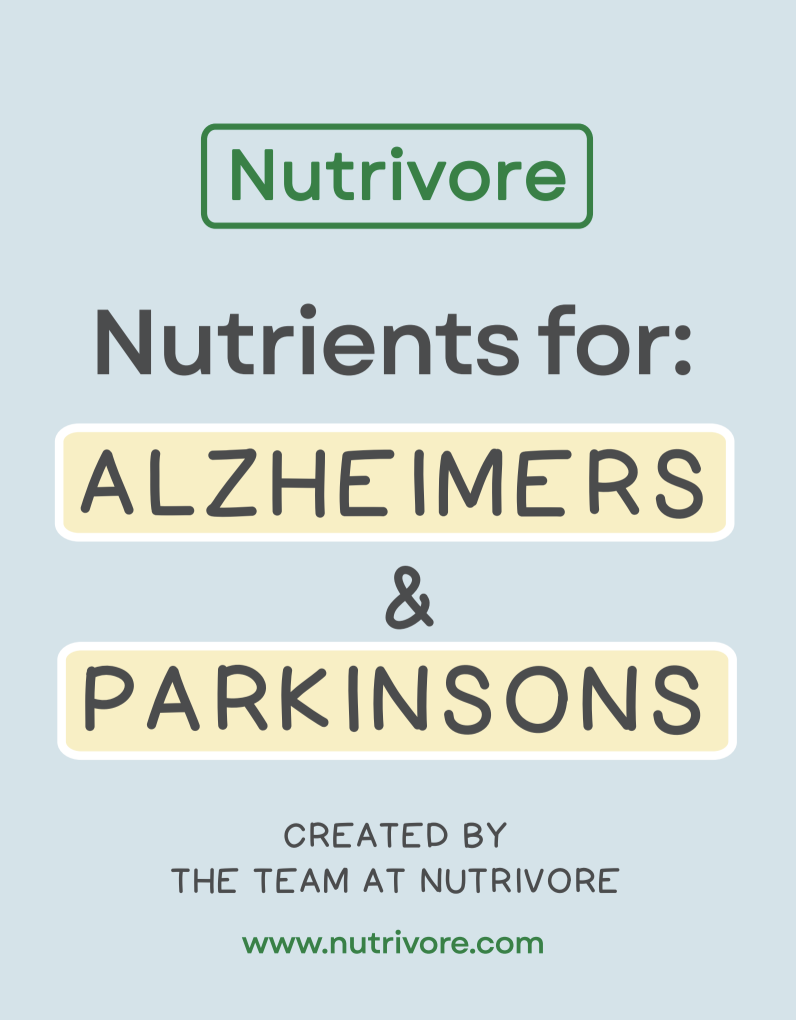
Nutrients for Alzheimer’s & Parkinsons
Nutrients for Alzheimer’s & Parkinson’s explains all the nutrients that matter most for supporting brain function and reducing neurodegenerative risk! This e-book is exclusively available in Patreon!
Plus every month, you’ll gain exclusive and early access to a variety of resources, including a weekly video podcast, a new e-book in a series, nutrient fun factsheet, and more! Sign up now and also get 5 free Nutrivore guides as a welcome gift! Win-win-win!
Benefits of a Food-Based Approach

A nutrient-focused, whole-food approach can play a supportive role in managing many health conditions, especially when paired with healthy lifestyle habits like physical activity and good-quality sleep. A food-based approach to nutrition offers health benefits that go far beyond what supplements can provide. Whole foods deliver a natural balance of nutrients that work synergistically, meaning vitamins, minerals, phytonutrients, healthy fats, carbohydrates and fiber can support each other for better overall health outcomes. Nutrient-dense foods like leafy greens, fruits, legumes, nuts, seeds, and fish are efficient, cost-effective, and widely accessible options that fit easily into a healthy diet and good eating patterns. By choosing whole foods first, you not only support a more balanced diet but also avoid the added costs and potential nutrient insufficiencies that can come with eating highly processed foods and relying solely on supplements to make up the shortfall.
The variety of nutrient-dense foods available across food groups makes it easy to enjoy a satisfying, diverse, and plant-forward (though not solely plant-based) way of eating. Many of these foods provide additional health benefits including antioxidants (which are anti-inflammatory), insoluble fiber for gut health, which in turn supports overall health and wellness. Because whole foods are often more accessible and affordable than supplements, a food-based approach creates a sustainable foundation for long-term well-being.
Nutrivore encourages filling your plate with a wide range of nutrient-rich foods without the need for restrictive rules, making it easy to prevent and support health conditions through the simple power of food. With a Nutrivore approach (maximizing nutrient density across food groups), a nutritious, balanced, and enjoyable way of eating becomes both achievable and flexible for any lifestyle. While it isn’t a replacement for medical care or the advice of a registered dietitian, a balanced, food-first approach can complement your overall strategy for improving many health conditions and support long-term health goals.